
-
Address: 1215 San Francisco
San Antonio, TX 78201 -
Call Us: 210-735-9235
gillette@gillette-ac.com
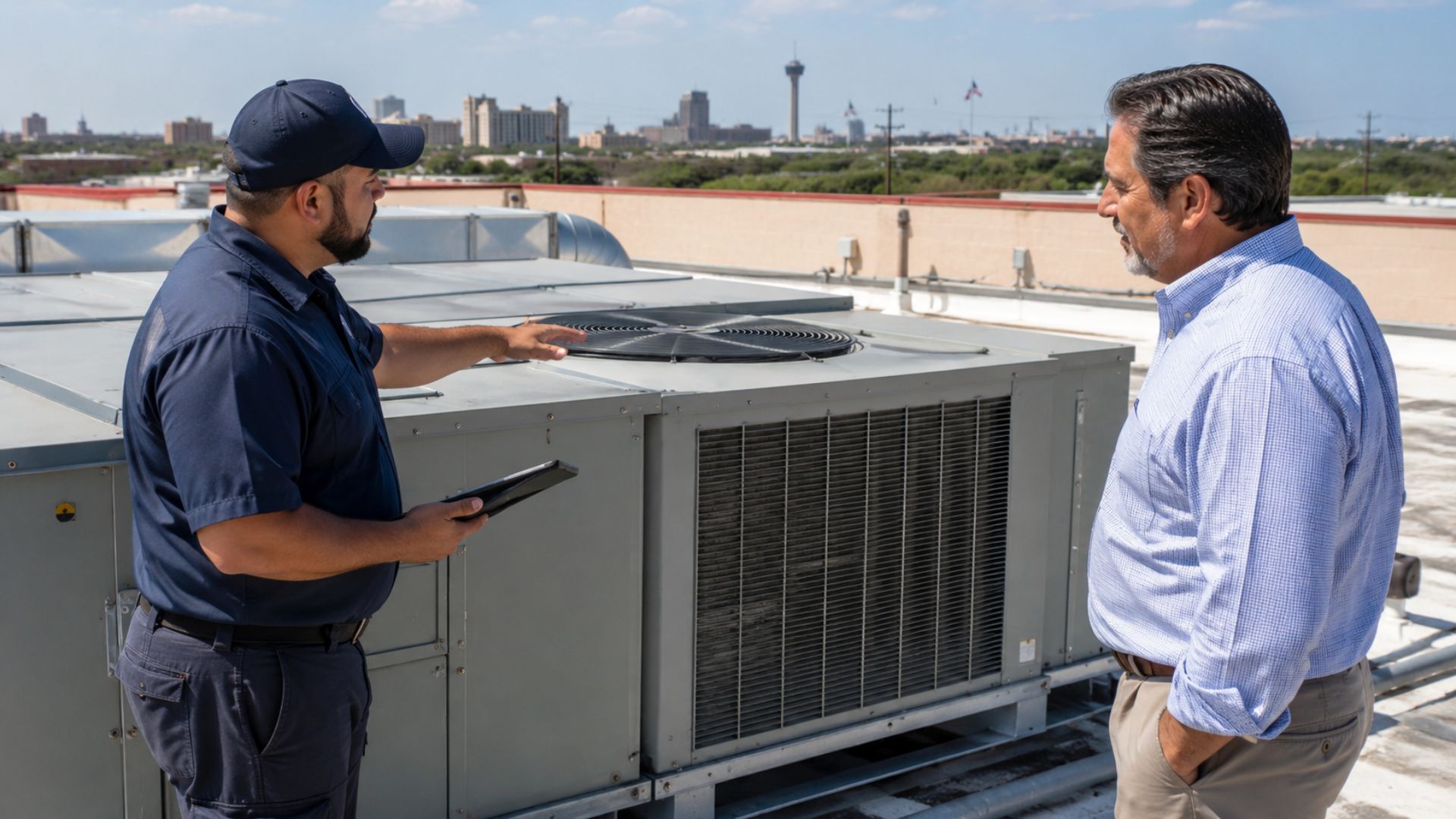
Replacing an air conditioning system is a significant decision, whether the equipment serves a commercial property or a home. The cost can vary based on the type of system, its size, efficiency, installation requirements, and the condition of the equipment already in place.
That is why there is no single AC replacement cost that applies across the board. A commercial rooftop unit, a larger split system, and a residential central AC system can all have very different equipment and installation requirements.
What Actually Affects AC Replacement Cost?
The equipment itself is only one part of the total cost. Installation can become more involved depending on where the system is located, what needs to be modified, and whether existing components can support the new equipment.
For commercial properties, cost can be affected by rooftop access, crane requirements, large duct transitions, electrical upgrades, building controls, zoning, or scheduling work around normal business operations.
For residential properties, factors can include difficult attic or closet access, damaged or undersized ductwork, electrical updates, thermostat changes, refrigerant or drain lines, and the location of the outdoor equipment.
Two properties can need similar cooling capacity and still have very different replacement costs because the installation requirements are different.
System Size and Cooling Requirements
Proper sizing matters for both commercial and residential HVAC systems.
For a business, cooling needs depend on more than square footage. Occupancy, operating hours, windows, equipment inside the building, layout, and how individual areas are used can all affect the amount of cooling required.
A restaurant, for example, may have different cooling demands than an office of a similar size. Buildings with server rooms, large windows, high ceilings, or spaces that stay occupied outside normal business hours may also require a different approach.
Residential systems have their own variables. Insulation, windows, ductwork, ceiling height, layout, and sun exposure can all affect cooling needs.
This is why square footage alone should not determine system size. The actual cooling requirements of the property need to be considered before selecting equipment.
How Do You Compare AC Efficiency?
Efficiency ratings give businesses and homeowners a better way to compare equipment instead of focusing only on the upfront price.
For residential central air conditioners, SEER2, or Seasonal Energy Efficiency Ratio 2, is one of the main measurements used to compare seasonal cooling efficiency. In general, a higher SEER2 rating means the system is designed to provide more cooling for the energy it uses under standardized testing conditions.
Commercial equipment may use different measurements depending on the type of system. IEER, or Integrated Energy Efficiency Ratio, is commonly used for many commercial systems because it considers performance at different operating loads.
The U.S. Department of Energy recommends considering efficiency and long-term energy use when comparing air conditioning equipment rather than looking only at the initial purchase price.
For commercial properties where HVAC equipment may run for long hours, operating efficiency can become especially important over the life of the system.
Equipment Brands and System Options
Manufacturer and equipment type can also affect replacement cost.
Businesses and homeowners may come across brands such as Carrier, Trane, Lennox, Daikin, and others when comparing systems. Each manufacturer may offer several equipment lines with different capacities, efficiency ratings, controls, warranties, and features.
Brand alone does not determine which system is the best fit. It is more useful to compare the specific equipment, efficiency rating, warranty, available controls, and how well the system matches the needs of the property.
Availability can also play a role, especially when replacing commercial equipment that needs to match existing infrastructure or controls.
Installation Requirements Can Change the Scope
Not every AC replacement is a simple equipment swap.
For commercial buildings, replacing rooftop equipment may require crane access, modifications to roof curbs or duct transitions, electrical work, or integration with existing building controls. Work may also need to be planned around employees, tenants, customers, or normal business operations.
Residential installations have their own challenges. An air handler located in a difficult attic may require more labor than equipment installed in an accessible closet. Existing ductwork may need repairs, and refrigerant lines, drain lines, electrical connections, thermostats, or the outdoor equipment pad may need to be modified.
Gillette provides HVAC service, maintenance, repair, and equipment replacement for commercial and residential properties throughout the San Antonio area.
Repair or Replace?
A problem with an AC system does not automatically mean the equipment needs to be replaced.
Instead, look at the system as a whole. Is it requiring repeated repairs? Is it struggling to maintain the temperature the property needs? Have major components started failing?
For commercial properties, it is also worth considering whether HVAC downtime is beginning to affect employees, customers, tenants, equipment, or daily operations.
A newer system that has otherwise performed reliably may still be a good candidate for repair. If an older system needs frequent service or can no longer meet the cooling needs of the property, replacement may make more sense over the long term.
The goal is not simply to replace equipment because something went wrong. It is to understand whether repairing the current system is still the better investment.
What Should Be Included in an AC Replacement Estimate?
When comparing replacement options, make sure you understand what is actually included in the estimate.
Depending on the project, that may include the equipment model and capacity, efficiency rating, installation labor, required duct or electrical work, controls, removal of the existing equipment, and warranty information.
Commercial estimates may also include items such as crane service, roof curb modifications, controls integration, or work that needs to happen outside normal operating hours.
Understanding the full scope makes it easier to compare options and see why one replacement may cost more than another.
Get an AC Replacement Estimate for Your Property
AC replacement costs vary because every building, system, and installation is different. A proper evaluation gives you a clearer picture of the equipment needed, any changes required for installation, and whether replacement is the right next step.
Whether you are planning an HVAC replacement for a commercial property or evaluating the AC system in your home, contact Gillette Air Conditioning to discuss your system and available options.